Why Your Supercar Could Be Worth More or Less Based Purely on Paint
Have you ever considered how the colour of the car you choose can affect the resale value? While your heart might want that striking yellow Porsche, your head may tell you that opting for jet black is the safer choice.
The paint colour you choose today doesn't just determine how you feel on the open road; it can also directly influence what your car will be worth in three, five, or ten years' time. So consider this: for premium and luxury vehicles, the difference can be substantial enough to cover several months' finance payments.
Here at Elev8 Finance, we understand the data behind car colour choices and reveal all in this article. Read on to find out more…
The UK Market: What the Data Actually Shows
In 2025, grey was the UK's top new car colour for the eighth consecutive year, claiming a record 27.6% market share. Black followed in second place, and together with blue, these three colours accounted for nearly two-thirds of all new car registrations.
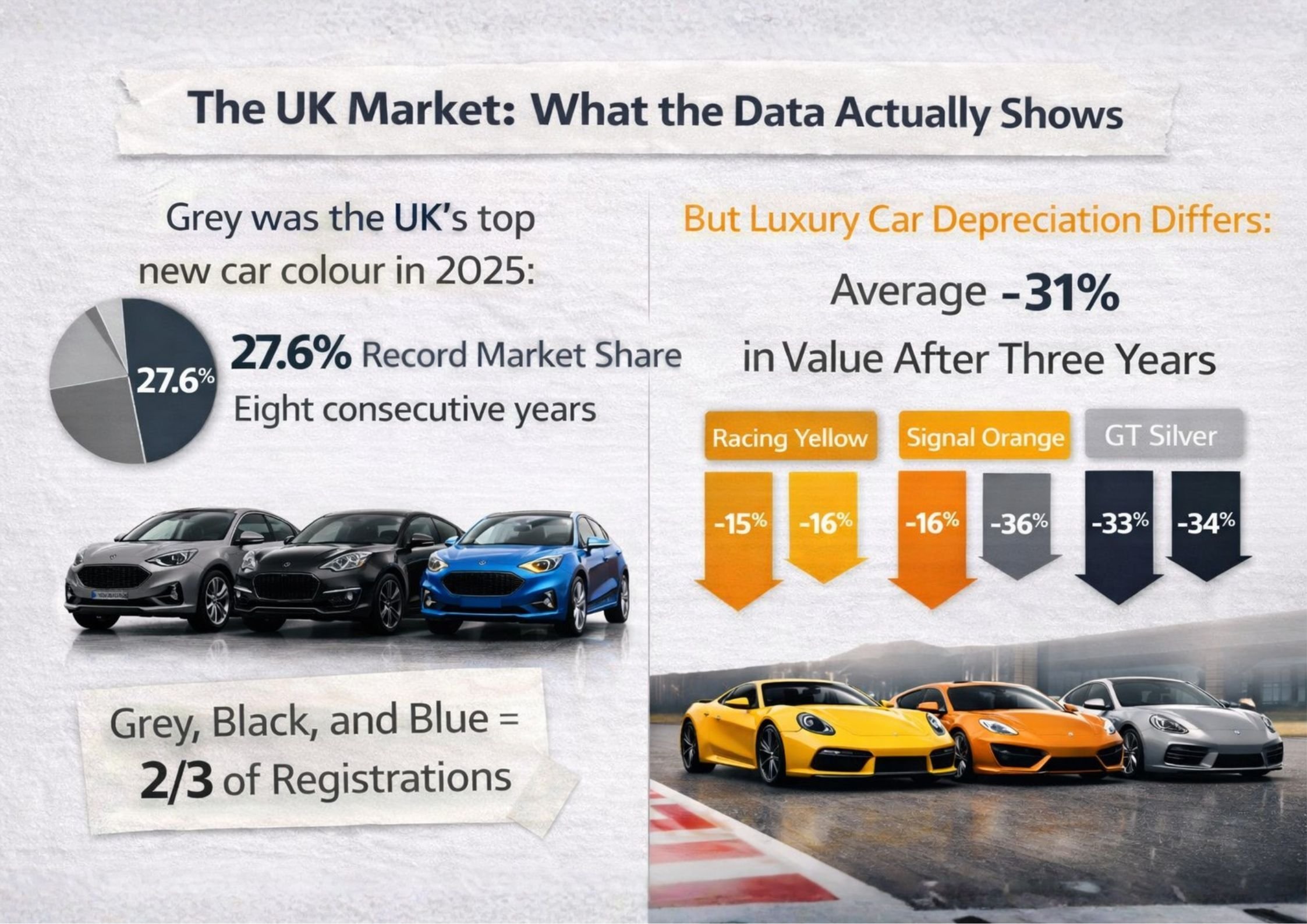
However, here's where the luxury car market differs dramatically: what works for Ford Pumas doesn't apply to Ferraris. According to comprehensive research analysing over 1.2 million three-year-old used cars, the average vehicle loses 31% of its value after three years. But when we break this down by colour, the disparities become financially significant.
Understanding the Colour Depreciation Scale
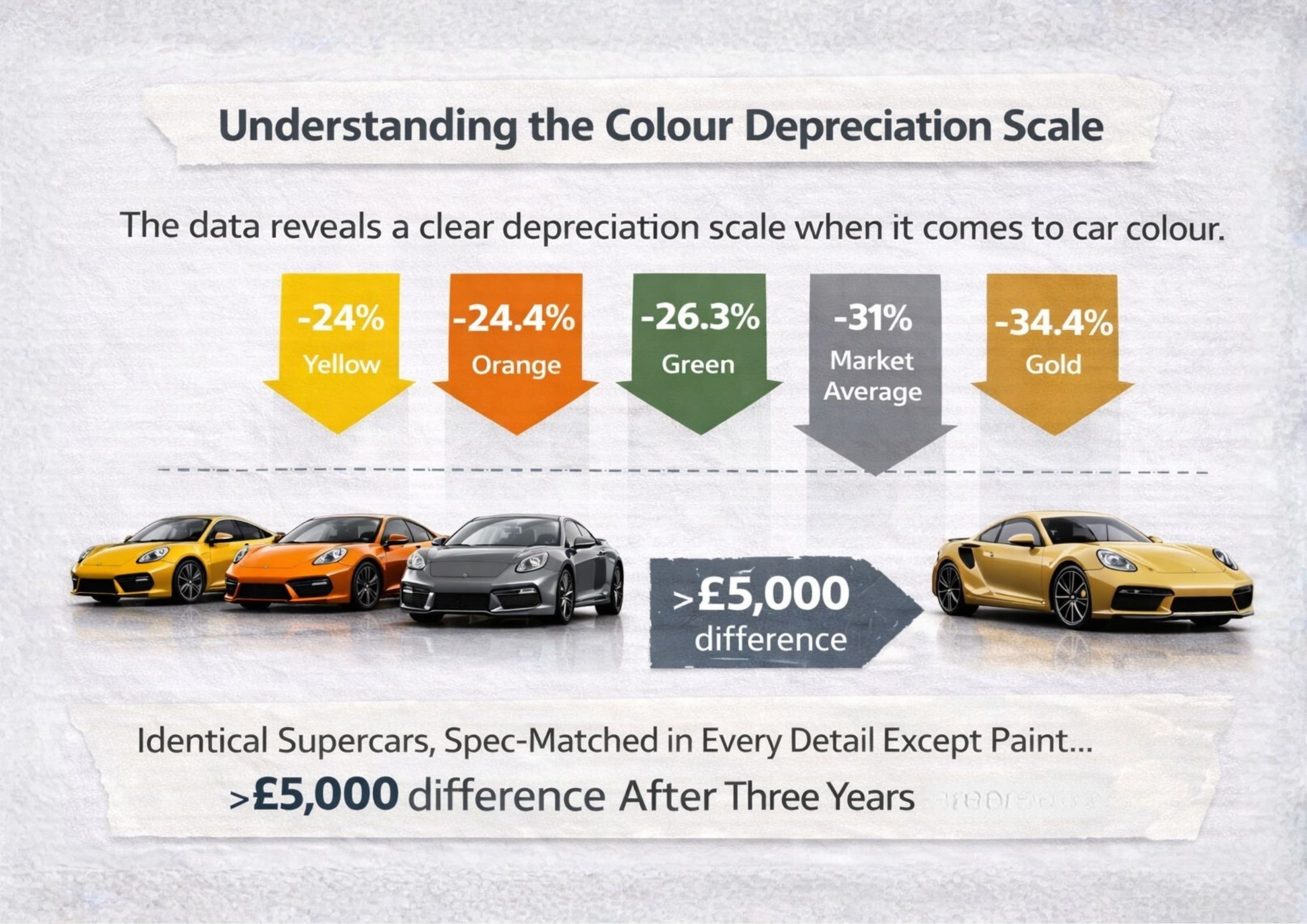
The data reveals a clear depreciation scale when it comes to car colour. For example, yellow cars lose just 24% of their value over three years, versus the market average. Orange follows closely at 24.4% depreciation, with green at 26.3%.
At the opposite end of the scale, gold cars lose 34.4% of their value compared to the market average. This means that two identical supercars, specification-matched in every detail except paint, could differ in value by £5,000 or more after just three years of ownership.
Why Supercars Are Different
In the premium and supercar market, conventional wisdom flips entirely. While a grey Ford Fiesta makes perfect resale sense for the everyday driver, a grey Lamborghini Huracán could be leaving substantial money on the table. In this scenario, what are generally considered “safe” colours can cost you.
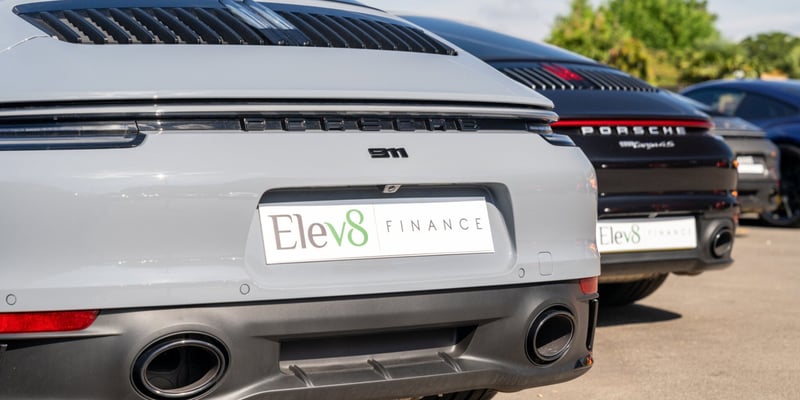
An analysis of Porsche auction data reveals that yellow Porsches sold for nearly £3,000 more than average. Conversely, black Porsches tended to demand over £1,000 below the average asking price. The so-called "safe" colours (such as white, black, silver and grey) performed mid-level for both sell-through rates and value retention.
The Supply and Demand Equation
The explanation for why supercars buck the trend is actually quite simple and comes down to supply and demand economics. When 77% of all new cars sold are white, black, grey or silver, distinctive colours become genuinely scarce commodities. Karl Brauer, an Executive Analyst at iSeeCars, explains that yellow vehicles are so novel in the second-hand marketplace that people are willing to pay a premium for them.
In the luxury car sector, this scarcity effect amplifies dramatically. To put it into perspective, when Lamborghini produces perhaps 9,000 vehicles annually worldwide, and only a handful arrive in the UK in a particular colour, you're buying a genuinely rare asset.
The Bespoke Paint Premium
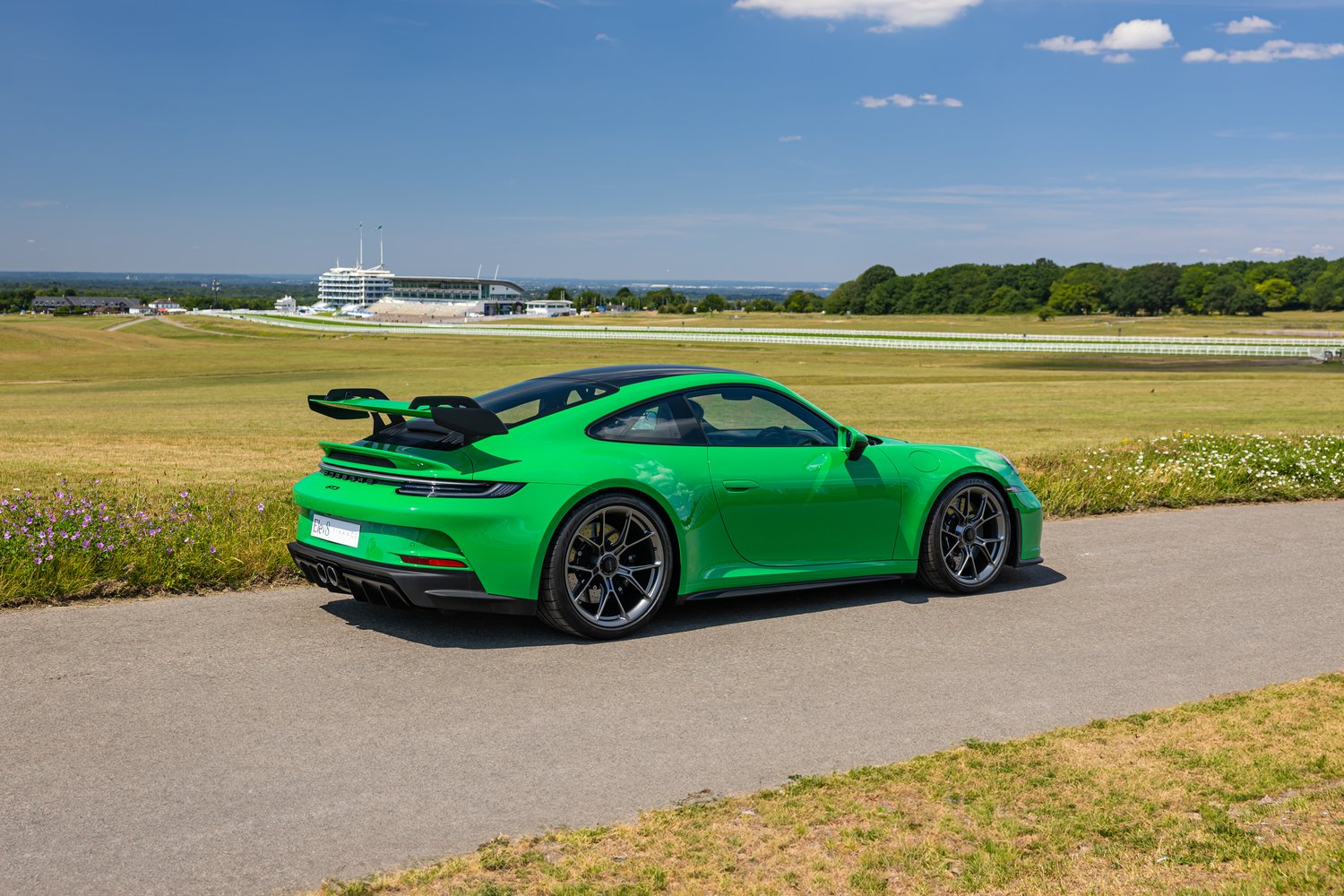
For Porsche enthusiasts, Paint to Sample (PTS) is the ultimate way to personalise your vehicle. These factory-custom colours, which can add £10,000 to £20,000 to the original purchase price, frequently return that investment and more at resale. Put it this way: well-chosen PTS colours routinely command anywhere from £15,000 to £30,000 premiums in the used market.
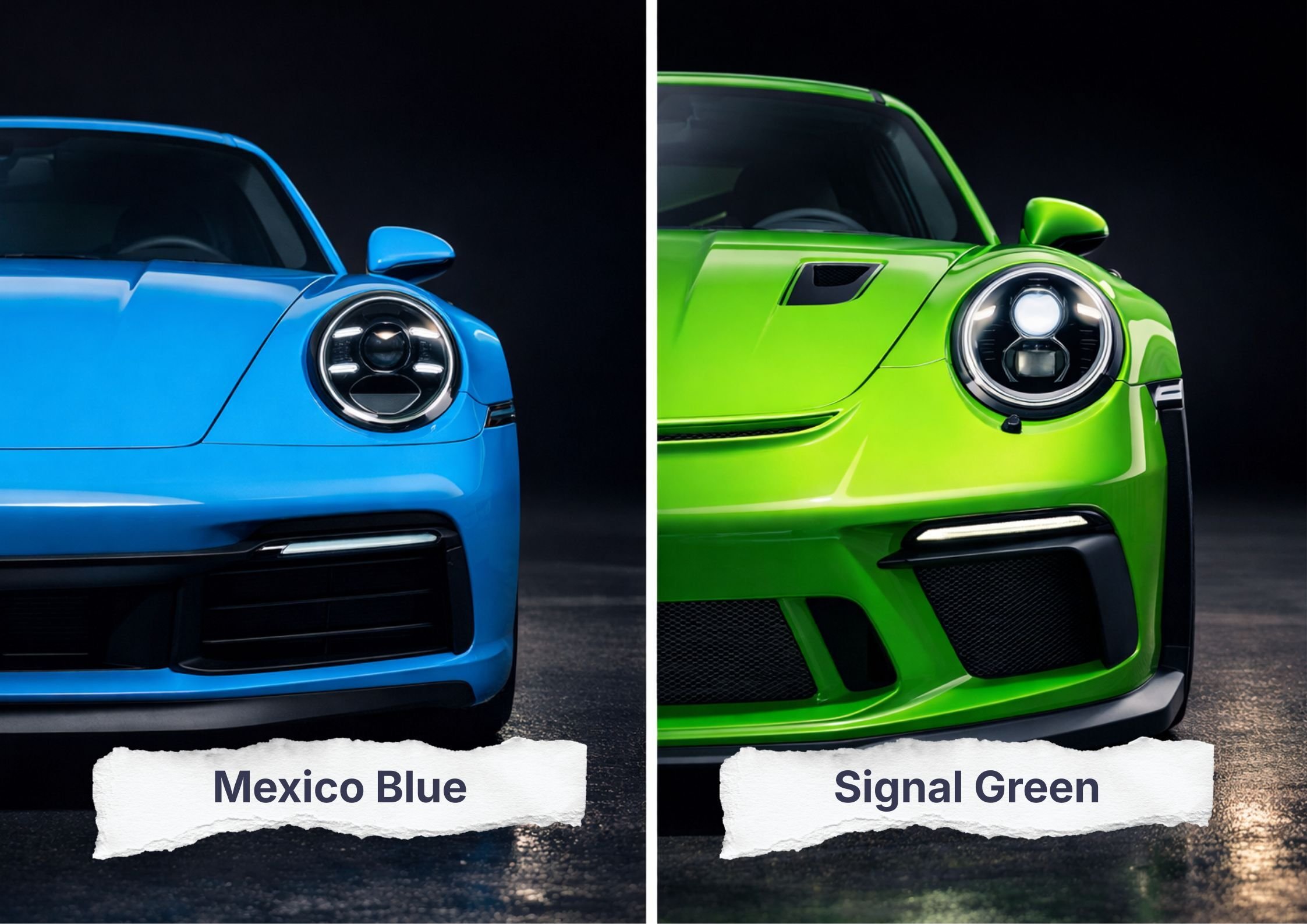
For example, a 911 GT3 RS in a desirable PTS shade like Mexico Blue or Signal Green can sell for significantly more than a specification-matched example in standard GT Silver. In this case, rarity breeds desirability, and desirability drives value.
The Finance Implications: How Paint Affects Your Agreement
At Elev8 Finance, we structure agreements based on anticipated residual values, and paint colour directly influences these projections. Here’s an example:
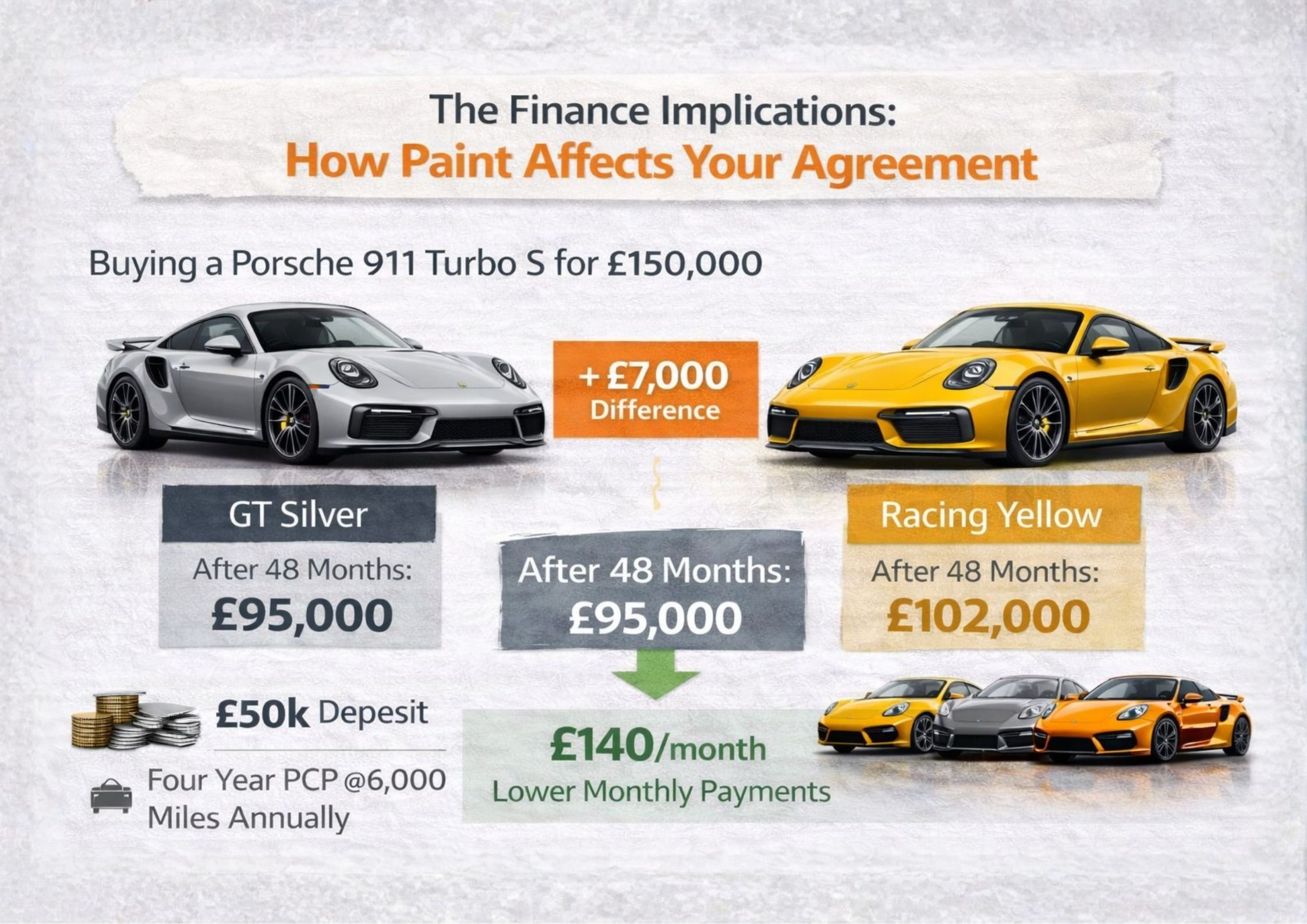
Let's say you purchased a £150,000 Porsche 911 Turbo S. If you specify it in GT Silver, our residual value projection after 48 months might be £95,000. So, what about the same car in Racing Yellow? Well, we might project a value of £102,000. In this example, that’s a £7,000 difference.
On a PCP (Personal Contract Purchase) agreement with a £50,000 deposit over 48 months at 6,000 miles annually, that higher residual value could reduce your monthly payments by approximately £140. Over four years, that amounts to £6,720 - nearly covering the entire difference in residual value through lower payments, while still leaving you with a more valuable asset.
However, specifying an unusual colour that limits buyer appeal could reduce your projected residuals by £10,000 to £15,000, significantly increasing monthly payments or requiring a larger upfront deposit.
Supercar Colour Trends for 2026
So, what car colours are exciting supercar drivers in 2026? You may or may not be surprised to hear that green car registrations rocketed to nearly 100,000 in 2025 - the highest level since 2004.
This surge aligns with broader luxury car colour trends. For example, Porsche's bespoke Oak Green Metallic Neo on the 911 GT3 exemplifies how heritage colours are being reimagined with modern finishes.
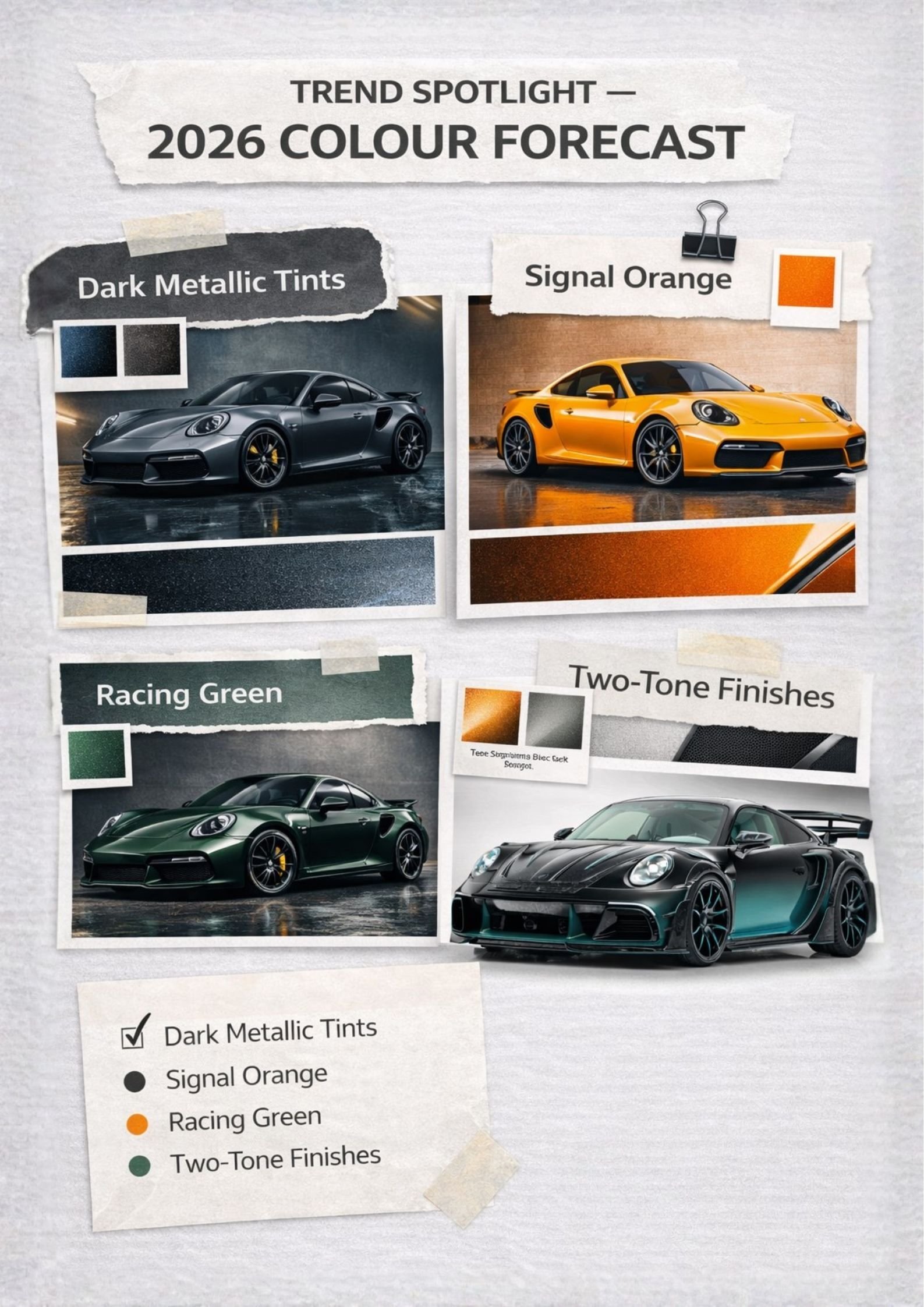
Industry designers predict three emerging trends. These are:
-
Dark metallics with subtle tints (consider these sophisticated variations on black)
- Vibrant shades like Signal Orange or Racing Green
- An increase in two-tone vehicles with contrasting roofs or body panels
For buyers making purchase decisions in 2026, these trends can matter financially. Think of it like this: choosing a colour that's currently emerging rather than peaking means you're potentially riding an appreciation wave rather than buying at the market top.
The Matte Revolution
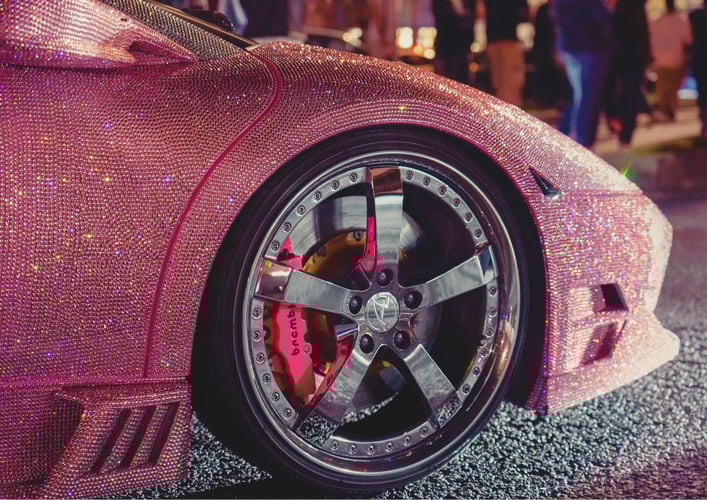
Did you know that matte and satin finishes can prove to be another valuable choice? These finishes typically add around £5,000 to £15,000 to the original specification cost, but their rarity in the used market can double or triple that premium.
For example, a matte black Aventador or satin McLaren 720S represents less than 5% of production. That scarcity translates directly into stronger residual values, particularly when properly maintained.
Making the Right Car Colour Choice
Questions to ask yourself before committing:
-
Which colour genuinely excites you? By that, we mean not to choose a colour you'll regret daily just to earn £3,000 more at sale time.
- Are you planning 2,000 miles annually or 15,000? Higher-mileage intentions can reduce your car colour's relative importance.
- Is this a limited-production model where the car itself is rare (colour matters less), or a series-production vehicle where colour becomes a key differentiator?
- Have you researched your model's used market colour value? Don't assume, but instead verify by looking at current asking prices.
- Can you absorb a potential £5,000 to £10,000 resale difference? If not, prioritise proven strong colours over a punchy personal choice.
The "Timeless" Colour Strategy
If maximising the resale value of the car is your primary objective, then several strategies virtually guarantee strong performance. For Porsche: Guards Red, Racing Yellow, or Miami Blue on appropriate models. For Ferrari: Rosso Corsa or Giallo Modena. For Lamborghini: the historical Giallo, Verde, or Arancio shades. For McLaren: Papaya or Volcano heritage colours.
These colours have proven themselves across decades. Market preferences shift, but these shades have maintained desirability through multiple cycles, so take note!
What About Respraying?
Some buyers consider respraying to "correct" a less desirable colour. But be wary, as this requires careful analysis. When it comes to costs, a professional showroom-quality respray on a premium vehicle can cost anywhere between £10,000 and £20,000 for most supercars, and £15,000 to £30,000 for complex models requiring extensive disassembly.
That respray can add value, but rarely more than its cost. A £120,000 Huracán in white might be worth £125,000 in yellow, but the £18,000 respray cost means you're effectively losing £13,000 on the transaction.
Protecting Your Supercar Investment
Even the most desirable colour loses value rapidly if poorly maintained. Premium paint finishes require diligent care to preserve their value advantage. Paint correction and ceramic coating services, while adding costs (typically £800 to £2,500), can dramatically enhance resale appeal.

Stone chips, scratches and poor-quality repairs can eliminate colour premiums entirely. A rare PTS Racing Yellow GT3 RS loses its premium status if the front bumper shows damage. The £3,000 to £4,000 cost of professional refinishing becomes essential to preserve that £15,000 to £20,000 colour premium.
Your Next Step in the Supercar Buying Journey
The relationship between paint colour and resale value is real, measurable, and potentially worth tens of thousands of pounds on premium vehicles. The key here is making informed decisions. Research your specific model's colour value, historically up until the current day.
At Elev8 Finance, we specialise in structuring finance agreements that accommodate these considerations. Our understanding of the premium car market, combined with our extensive lender relationships, allows us to factor colour premiums into residual projections accurately.
The paint colour you choose influences your entire ownership experience and final financial outcome. Make that choice with eyes wide open to both the emotional and financial implications.
Contact us today to discuss how paint colour considerations fit into your overall finance strategy. We have the expertise to guide you through the decision with confidence. Your dream car awaits - in whatever colour makes your heart race.