%20(3).jpg?width=1600&height=1000&name=Elev8%20Finance%20blog%20body%20images%20(landscape)%20(3).jpg)
We discuss modern car buying influences (and what it means when status meets the showroom!)
There was a time (pre-social media!) when buying a supercar meant you visited a car dealership, you sat in the car, you drove it, you made a decision, and if you liked it, you took it home and probably shared a few pics among close friends and family.
While that world still exists in some capacity, it’s sharing space with a much wider network of people. It’s a world where the car is chosen partly for how it looks in a reel, where the reveal moment is planned before the delivery date is confirmed, and where a vehicle's status matters almost as much as its performance figures.
Welcome to the Instagram Effect. No matter whether you embrace it or roll your eyes at the thought, it is reshaping the supercar market in ways that have a very real financial impact.
Key Takeaways:
26% of vehicle buyers now use social media as part of their research process, placing it on par with manufacturer or dealership websites
The UK influencer marketing sector was valued at over £1 billion in 2024, with automotive among the fastest-growing content categories on platforms including Instagram, TikTok, and YouTube
Colour and specification choices of cars are measurably shifting toward "camera-ready" finishes
Rolls-Royce reports growing demand for high-contrast bespoke paint combinations
McLaren has noticed a significant uptick in bold exterior colour selections through its MSO programme
Research consistently shows that buyers who use social media in their purchase journey are more likely to arrive at the point of sale with a specific model and specification already decided
The Scroll-to-Showroom Journey
There is a fundamental shift in how people discover, desire, and ultimately acquire high-performance cars. Unlike more traditional methods of buying a supercar, this process doesn’t start in a dealership forecourt, but in the palm of your hand on a mobile phone at any time of the day or night.

A recent study by Cox Automotive about the Car Buyer Journey found that 26% of vehicle buyers now use social media as part of their research process. For context, that figure was negligible only a decade ago. This shift shows that for a significant and growing section of car buyers, social media is effectively replacing the initial stages in the buying journey.
The Power of Instagram, TikTok and YouTube
For the supercar market specifically, this shift is even greater. Aspirational automotive content is among the most engaged-with categories on Instagram, TikTok, and YouTube - three of the biggest dominators on social media.
A single well-produced video by a content creator of a supercar being delivered can generate millions of views in a matter of days. Safe to say that a collaboration between an influencer and a manufacturer can accelerate waiting list interest, literally overnight.
This means that the potential pipeline from "I saw it on Instagram" to "I'm speaking to a finance provider" is shorter than it has ever been - and the gap is only headed in one direction.
Using Social Media as a Car Buying Platform
Let’s face it. Status has always sold supercars, but social media is providing the platform to turn up the volume and enter into new territories. What social media has done is not create the desire for status, but has amplified it, accelerated it, and given it a measurable audience.
Before platforms such as Instagram existed, a new supercar was likely seen by your friends, your neighbours, your colleagues, and the people at the traffic lights alongside you. Today, it is seen by tens of thousands of followers before you've driven the first 500 miles.
%20(2).jpg?width=2245&height=1587&name=Elev8%20Finance%20blog%20body%20images%20(landscape)%20(2).jpg)
The audience available to see your exciting new purchase has expanded dramatically. Although this is not inherently problematic, it does introduce a dynamic that buyers (and the finance professionals who support them) need to understand.
Consider this thought: when the audience for a decision expands, the risk of that decision being made for the wrong reasons expands with it. Just something for you to mull over.
Buying a Supercar for the Camera
One of the biggest changes the Instagram Effect has had on supercar buying choices is the reason for purchase. And these choices are diverging from what the data tells us holds its value best.
Traditionally, the advice from residual value specialists generally followed these rules: opt for classic colours (silver, black, white), avoid highly polarising options, and keep the specification recognisable.
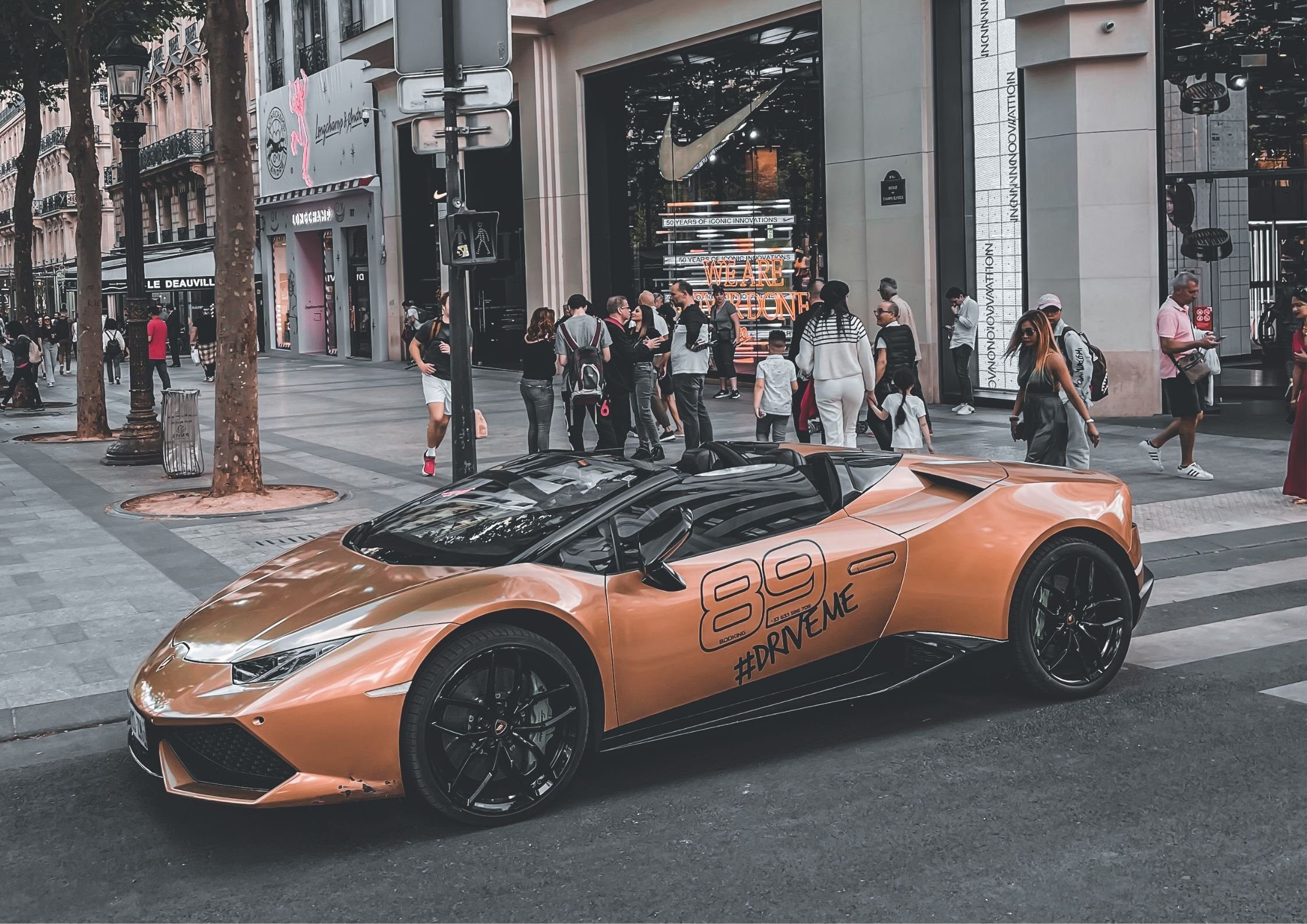
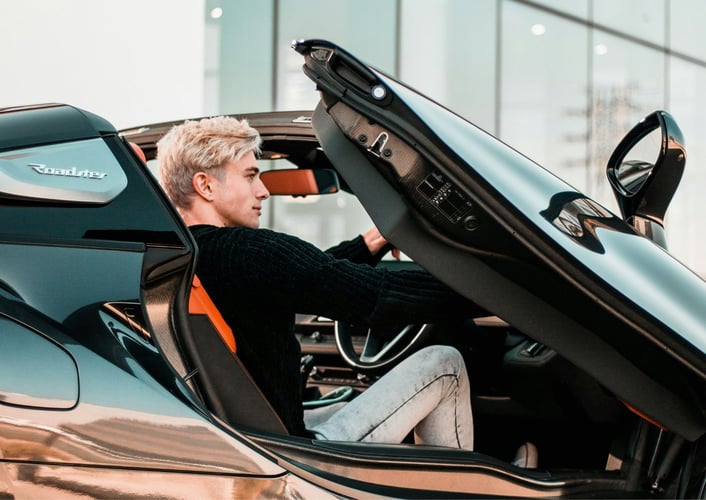
But the impact of social media on the car-buying journey has complicated this formula. Safe to say that it's created a new type of supercar buyer who is far less focused on an exit strategy and more focused on the visual impact during ownership. Let’s face it, bright colours, bold wraps, and distinctive specifications perform better as online content - especially when you have thousands of followers.
The Market’s Response
So, for supercar buyers who plan to document their ownership journey to a social media audience, then the performance of that content based on a particular purchase (and how it is perceived) is a legitimate consideration for influencers and content creators.
Not to be left behind, the market has responded accordingly. For example, Rolls-Royce has reported growing demand for high-contrast bespoke paint combinations through its Bespoke programme. And, McLaren has noted a significant uptake in bold exterior colour selections through MSO.
The Content Creator Economy and the Supercar Market
It would be pretty naive of us to discuss social media's influence on buying a supercar without acknowledging the important role of automotive content creators. Let’s face it, there is a substantial commercial ecosystem that has grown around them - and will continue to do so.

The UK influencer marketing sector was valued at over £1 billion in 2024, with automotive content among its fastest-growing categories. Creators with audiences in the hundreds of thousands (and in some cases millions) now function as an informal but highly influential layer between car manufacturers and buyers.
Their reviews, delivery reactions, and ownership diaries shape perception in ways that traditional car advertising cannot replicate, because they carry the credibility of authenticity and aspiration from their dedicated followers and fans.
Car Makers and Social Media Influencers
For manufacturers, partnering with social media influencers provides an extraordinary marketing and distribution opportunity. For buyers, though, there is a more subtle challenge to overcome: distinguishing the difference between genuine ownership insight and commercially influenced content.
Many automotive content creators have formal or informal relationships with dealers, manufacturers, or finance providers. As you can imagine, despite best efforts, disclosure practices can vary. The line between a considered recommendation and a paid placement is not always completely clear.
But when the purchase decision involves six figures and a multi-year finance commitment, the stakes of a poorly-informed decision are considerably higher than buying the wrong type of protein powder!
The Role of TikTok in Supercar Sales
If Instagram gave supercar culture a glossy editorial aesthetic, then TikTok has given it velocity.
TikTok’s short-form video format has dramatically sped up the discovery-to-desire timeline. A car that might previously have taken months to filter through traditional media coverage and word of mouth can achieve mass cultural visibility in hours or days on TikTok.
.jpg?width=2245&height=1587&name=Elev8%20Finance%20blog%20body%20images%20(landscape).jpg)
When a new supercar is picked up by a content creator with genuine automotive credibility, the stakes are high for the partnering marques. The Lamborghini Urus, the Porsche Cayenne Turbo GT, and the BMW M3 Competition Touring have all benefited from this kind of organic platform momentum at various points in their recent histories.
For the Gen Z buyer demographic (a group already entering the supercar market earlier than any previous generation), backed by self-generated wealth from digital businesses, TikTok functions as both a discovery engine (an alternative to Google) and a community.
Reel Content for the Masses
This new approach to supercar ownership very much matters for the finance market. This is because a buyer whose primary relationship with their car is as a content asset may think about ownership cycles very differently compared to a buyer motivated by engineering appreciation or long-term investment.
The new norm is shorter cycles, more frequent upgrades, and a preference for products with strong visual and cultural currency at the time of purchase.
What This Means If You're Financing a Supercar
Specification and Residual Values
Our advice is that before committing to a bold wrap, a non-standard colour, or significant visual modifications to a supercar, first speak to a specialist like us about the likely resale implications.
Ownership Cycle Expectations
Finance products such as Personal Contract Purchase (PCP) can accommodate this well, but need to be structured around realistic mileage projections and honest residual value assumptions. At Elev8 Finance, we can help you map the right product to the right cycle.
Buying For Trend vs Buying For Substance
Of course, there are supercars (and plenty of them) that have both cultural currency and genuine engineering substance. The best-informed supercar buyers (no matter what generation they are from) are the ones who can distinguish between the two.
Selling Supercars Through Social Media: Final Thoughts
That is not a bad thing. The communities built around automotive content on Instagram and TikTok are genuine, enthusiastic, and often deeply knowledgeable. The creators who have built audiences on the back of honest ownership insight provide in-depth understanding and real-life reviews that the market genuinely benefits from.
%20(1).jpg?width=2245&height=1587&name=Elev8%20Finance%20blog%20body%20images%20(landscape)%20(1).jpg)
The Instagram Effect is Real
If it also happens to look extraordinary in your social media feed, well then, that should be considered a bonus, not the brief.
Supercar Finance for Social Media and Beyond
We’d love to discuss this opportunity with you - get in touch for a no-obligation conversation.